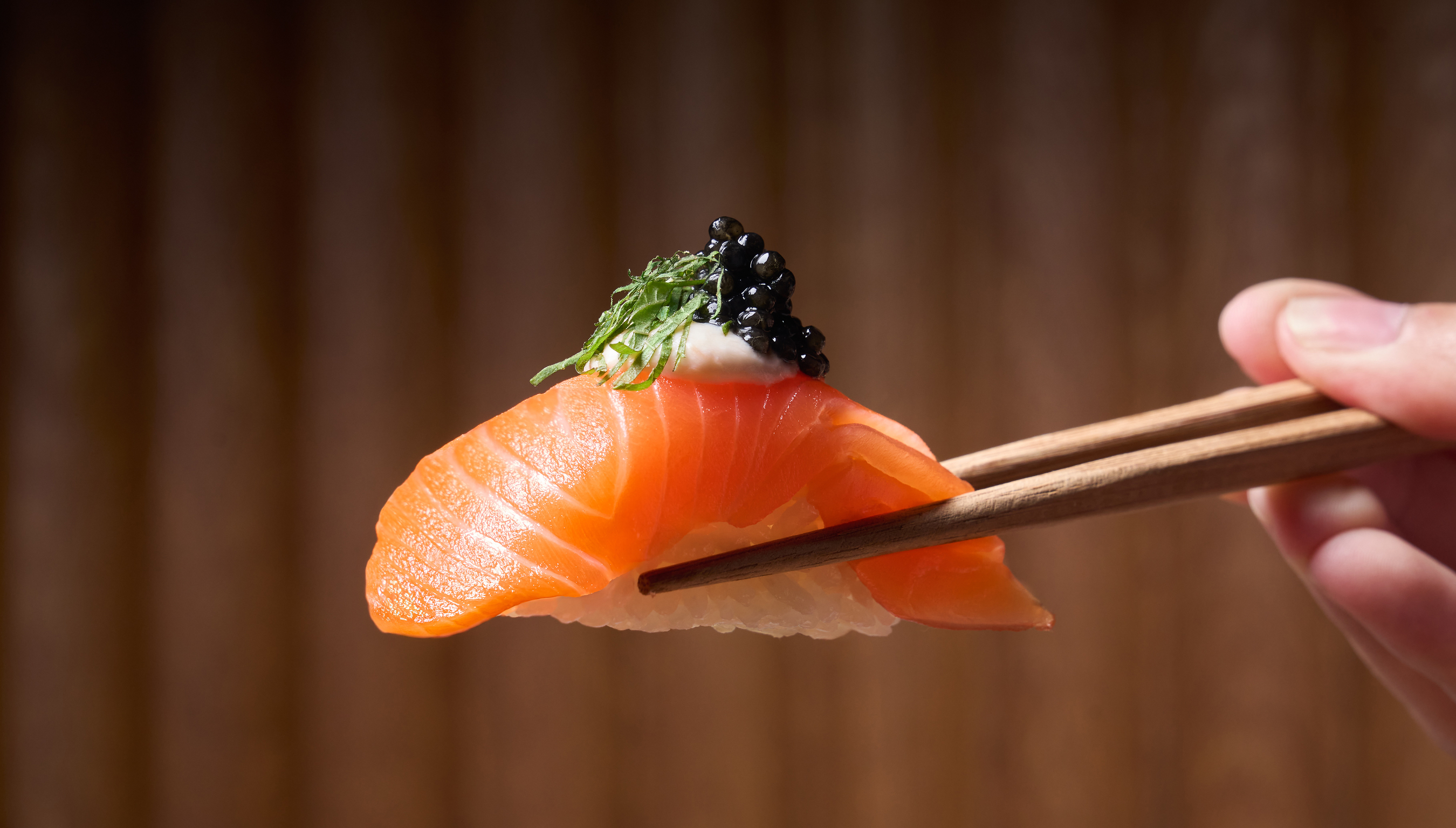
Seven years after debuting in Miami's Wynwood neighborhood, OMAKAI is pushing beyond its home market for the first time, signing leases for two Chicago locations and an Orlando unit as part of what the brand calls its most significant growth wave to date.
The South Florida accessible-omakase concept will open a 66-seat flagship at 951 W Fulton Market — complete with a basement bar — and a 30-seat hand roll bar at 507 N Wells Street in River North. Both Chicago units are targeted to open before year-end and will cover lunch, happy hour, and dinner dayparts. Off-premise volume will run through a packaged 'Homeakase' sushi box available via UberEats, extending the brand's reach beyond its seated capacity.
The Florida Foundation
Since its 2019 founding by brothers Diego and Pedro Quijada, Nicolas Sayavedra, and Chef Aaron Pate, OMAKAI has built a five-unit South Florida footprint spanning Wynwood, Coconut Grove, Doral, Aventura, and Downtown Miami. Two additional Florida locations — a sushi unit and a hand roll bar in Brickell — are under development, as is the brand's first Orlando lease. The simultaneous push into three new locations across two states represents a meaningful step up in unit-growth pace for an operator that has historically grown one market at a time.
The dual-format strategy — a full sushi restaurant alongside a counter-service hand roll bar — gives OMAKAI optionality on real estate footprint and average check. The River North hand roll bar format, with 30 bar seats, fits smaller inline spaces and lower build-out costs, a model gaining traction among Japanese fast-casual concepts competing for off-peak daytime covers and late-night traffic in dense urban corridors.
Market Positioning
Chicago's Fulton Market corridor has become one of the most competitive fine-casual dining corridors in the country, attracting national concepts alongside independent operators. OMAKAI's entry positions it squarely in the accessible omakase segment — a format that blends the chef-selected sequencing of traditional omakase with à-la-carte pricing and walk-in accessibility. The segment has drawn growing operator interest as consumers seek experiential dining without the $200-plus per-head commitment of high-end omakase counters.
"Expanding beyond Florida for the first time is a defining moment for everyone who has been part of the OMAKAI journey," said Diego Quijada, founder and CEO of OMAKAI. "We can't wait to introduce a whole new community to accessible omakase, with warm rice, crispy nori and kind service every single time."
For foodservice operators tracking the broader sushi and Japanese fast-casual segment, OMAKAI's Chicago move reflects wider momentum in experiential, ingredient-forward concepts pushing beyond their origin markets. As covered in our fast-casual segment trend reporting and unit-growth tracker, regional independents with differentiated formats are increasingly competing for the same urban real estate as national chains — often with tighter concepts and lower per-unit overhead. Exact opening dates and reservation details for the Chicago locations are expected in the coming weeks.
Written by Michael Politz, Author of Guide to Restaurant Success: The Proven Process for Starting Any Restaurant Business From Scratch to Success (ISBN: 978-1-119-66896-1), Founder of Food & Beverage Magazine, the leading online magazine and resource in the industry. Designer of the Bluetooth logo and recognized in Entrepreneur Magazine's "Top 40 Under 40" for founding American Wholesale Floral, Politz is also the Co-founder of the Proof Awards and the CPG Awards and a partner in numerous consumer brands across the food and beverage sector.