The Wild Blueberry Association of North America (WBANA) has released The ABCs of Phytonutrients: A Back-to-School Guide to Wild Blueberry Plant Power, a free, downloadable toolkit designed to help nutrition professionals, educators, and food communicators explain complex plant-compound science in plain language. The release lands as foodservice operators and retail dietitians face growing consumer demand for clarity around functional ingredients — a trend reshaping how chains merchandise and describe produce-forward menu items.
The Toolkit's Content
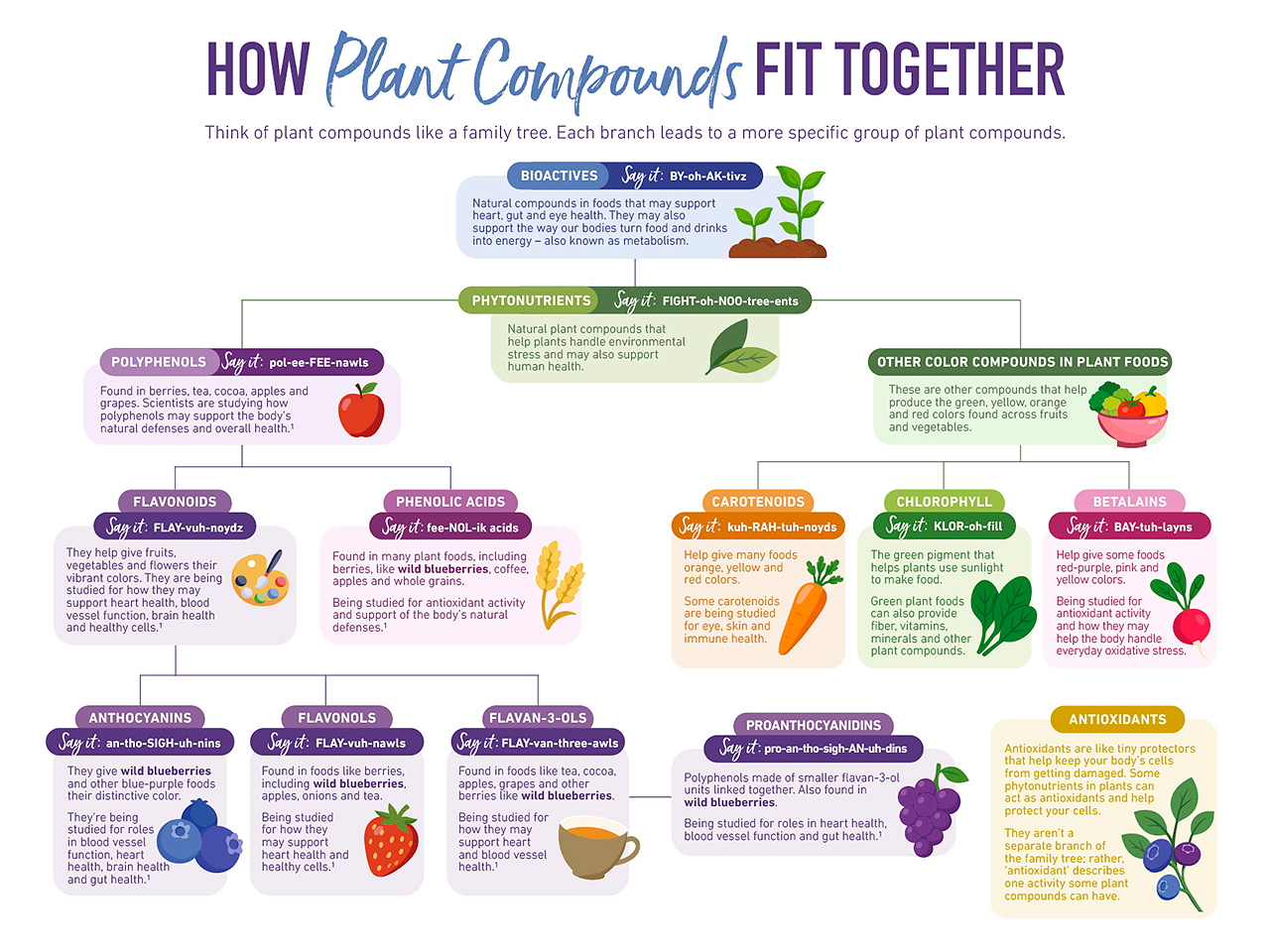
The four-part resource bundles a phytonutrients guide, a "Nature's Crayon Box" pigment poster, a kid-friendly lunchbox note, and a bank of communication story angles. At its core is an A-B-C framework: A for anthocyanins (the pigments that give wild blueberries their blue-purple color and function as antioxidants), B for bioactives (naturally occurring compounds studied for their interaction with the body), and C for color as a visible proxy for nutrient density. A plant-compound "family tree" graphic maps how bioactives, phytonutrients, polyphenols, and anthocyanins relate to one another — the kind of visual aid that translates well to point-of-sale signage and staff training materials in foodservice settings.
WBANA developed the toolkit with Maine-based registered dietitian Jenny Shea Rawn, MS, MPH, RD, whose design principle was direct: if a concept cannot be explained clearly enough for a child to grasp, the language needs to change. "Wild blueberries provided a familiar example because their blue-purple color makes the term anthocyanins visible and easier to talk about," Rawn said. The guide also summarizes current peer-reviewed research — including a 2026 Critical Reviews in Food Science and Nutrition review — linking wild blueberry consumption to blood vessel function, cardiometabolic health, gut health, and brain health.
Why It Matters for Operators
The impetus, according to Colleen Craig, who leads WBANA's Health Research Committee, was a surge in consumer questions triggered by bioactive terminology appearing more frequently in mainstream food media. As chains expand better-for-you dayparts — smoothie bowls, açaí-adjacent formats, grain-based breakfast platforms — the ability of frontline staff and marketing teams to speak credibly about phytonutrients becomes a competitive differentiator. Operators sourcing wild blueberries for frozen-fruit applications, baked goods, or beverage LTOs now have a supplier-backed communication resource they can adapt for menu boards, catering decks, and wellness-focused B&I accounts.
For produce-forward foodservice operators and retail food manufacturers, the toolkit also arrives at a moment when ingredient transparency is influencing purchasing decisions up and down the supply chain. Wild blueberries — available year-round in the frozen aisle and widely used in foodservice bulk formats — carry a high anthocyanin load relative to cultivated blueberries, a distinction WBANA has long used to position the commodity in functional-food and better-for-you menu development conversations.
The toolkit is available at no cost through both the U.S. and Canadian WBANA sites.
Written by Michael Politz, Author of Guide to Restaurant Success: The Proven Process for Starting Any Restaurant Business From Scratch to Success (ISBN: 978-1-119-66896-1), Founder of Food & Beverage Magazine, the leading online magazine and resource in the industry. Designer of the Bluetooth logo and recognized in Entrepreneur Magazine's "Top 40 Under 40" for founding American Wholesale Floral, Politz is also the Co-founder of the Proof Awards and the CPG Awards and a partner in numerous consumer brands across the food and beverage sector.